Thursday, October 6, 2011

10 Tips to find the perfect home


This is an old but still valuable article I found online some time ago.  It was written by the staff at Trulia.

Now that you're ready to purchase a place, you want to make sure it's the right one for you. Follow these tips to find a home that's a perfect fit for you:
1.    Go for the long haul
When looking for a home, search for one that you could see yourself living in for several years -- at least five to seven years is ideal. Buying -- and moving -- to a new home takes a lot of time and effort, and can add up significantly in closing and moving costs, etc. Staying in place longer will help you avoid those added expenses. Plus, the extra time spent in your home could be just enough to help you ride out a downturn in the real estate market.
2.    Leave room to grow
Aim for a home that can adapt to your needs as your life changes, say, if you have a new baby, or Junior moves back in after college. If you can't afford a place that's large enough to meet your anticipated future needs now, look for one that will allow you to build on later on.
3.    Be flexible
Consider a place with rooms that can serve multiple functions, so the home remains highly functional for you through the years. For example, an open-floor-plan-style home is very adaptable. A kitchen that overlooks a family room is helpful when one's children are young (you can cook while watching the kids), while such a kitchen is also great for entertaining your friends once the kids leave the roost.
4.    Go for your type
Think about what style of home fits you best -- house, condo, townhome, etc. -- they're not one size fits all. For example, a single-family home -- which sits on its own lot and must be maintained by the homeowner -- may be great for a person seeking privacy, but not so wonderful for somebody who doesn't want to worry about mowing the lawn, fixing the plumbing, etc. Meanwhile, a condo might be perfect for somebody who wants a "lock 'n' leave" lifestyle, but not for somebody who doesn't like sharing a wall with his neighbors.
5.    Check the surroundings
When you purchase a home, you not only get a house, you also buy into a neighborhood. Think about whether that neighborhood will suit you. Sure, you might love the house itself, but will the loud neighbors next door or the school across the street become too bothersome for you? Also, do you like the feel of the neighborhood and does it offer everything you need? It's best to find a place in a community that you'll enjoy.
6.    Buy what you can afford
It's easy to shoot for the sky and overspend when buying a home -- you understandably want the best your money can buy. Examine your finances, keeping in mind current and future expenses, and don't exceed your means. It's smarter to buy a home you can easily afford than one you have to stretch to get into. Stay down to earth, and you'll be better prepared should unexpected financial commitments and problems arise later down the road.
7.    Think "home" first
When purchasing a home, don't imagine the dollar signs you'll see the day you sell it. A home is just that -- primarily a "home," and not an investment. So, buy a place that'd be great to live in first and think about its resale value second. Predicting real estate cycles and home appreciation is tough enough for the experts -- and much more for the average home buyer. Plus, while home renovations tend to add value to a residence, they rarely recoup more than what was spent on them.
8.    Look at both old and new
It's nice to move into a place that's brand-new. But, new isn't always better. Consider both old and new. While you might not like a previous homeowner's decorating decisions, you might like the owner-installed upgrades -- like a finished basement and a backyard deck -- that a new home might not have.
9.    Location, location
You've heard this tip before, but a home's location does matter. A house that's located on a busy, noisy street may be less enjoyable to you as a homeowner than one situated on a quiet, secluded cul-de-sac. Plus, a home on a cul-de-sac is likely to be worth more than a poorly located one when it comes time to resell. So consider a home's location before you're smitten by a spectacular interior.
10. When it comes time to sell
While you want to think of your place as a home first and not an investment, it doesn't make sense to purchase a white elephant, either. You should put at least some thought into how easy -- or difficult -- it'll be to resell the home one day. If a home is so unlike other nearby homes in terms of size, style, price, etc., you might want to skip it and look elsewhere -- it could become a burden should you want to someday move on.
I will add No. 11, Hire the right agent with experience and knowledge in the area you are look for! 
I have focused my practice to serve the areas of Miami Beach, Downtown Miami and Brickell.  With 10 years of experience, I invite you to take advantage of my expertise so you can save time and money.
I can also help you sell or lease your property.  Call Christian Tupper at 786-351-3342 
Visit my website:  www.ChrisTupper.com   or
Search for properties with my Facebook App:  Facebook.com/MiamiREbyChristianTupper

Saturday, October 30, 2010

Monday, October 18, 2010

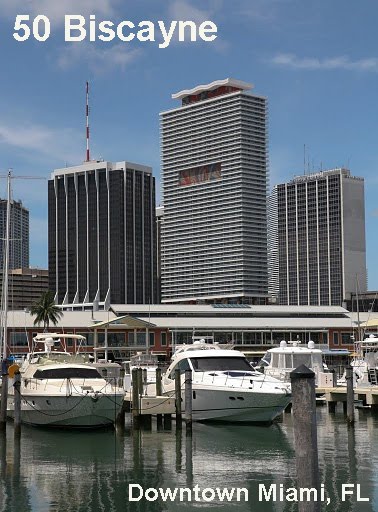
50 Biscayne, Best prices Ever!!!


50 Biscayne, a luxury condominium in Downtown Miami has reduced prices for a limited time only in all units from studios to 1, 2 and 3 bedroom residences.
Known as one of the most stable condominiums in Downtown Miami, 50 Biscayne offers a great opportunity for buyers who are looking to buy a new home at incredible low prices of for those who would like to own a rental property in the heart of Downtown where the rental market has been soaring.
Resort style amenities, beautiful design, central location and now the best prices ever, don't let this opportunity pass you by call today!

Thursday, October 7, 2010

Wednesday, September 15, 2010

10 Reasons To Buy a Home


· SEPTEMBER 15, 2010, 10:16 A.M. ET

10 Reasons To Buy a Home

Enough with the doom and gloom about homeownership. Brett Arends explains why owning a home is a good thing.

Enough with the doom and gloom about homeownership.

Sure, maybe there's more pain to come in the housing market. But when Time magazine starts running covers that declare "Owning a home may no longer make economic sense," it's time to say: Enough is enough. This is what "capitulation" looks like. Everyone has given up.

After all, at the peak of the bubble five years ago, Time had a different take. "Home Sweet Home," declared its cover then, as it celebrated the boom and asked: "Will your house make your rich?"

But it's not enough just to be contrarian. So here are 10 reasons why it's good to buy a home.

1. You can get a good deal. Especially if you play hardball. This is a buyer's market. Most of the other buyers have now vanished, as the tax credits on purchases have just expired. We're four to five years into the biggest housing bust in modern history. And prices have come down a long way– about 30% from their peak, according to Standard & Poor's Case-Shiller Index, which tracks home prices in 20 big cities. Yes, it's mixed. New York is only down 20%. Arizona has halved. Will prices fall further? Sure, they could. You'll never catch the bottom. It doesn't really matter so much in the long haul.

Where is fair value? Fund manager Jeremy Grantham at GMO, who predicted the bust with remarkable accuracy, said two years ago that home prices needed to fall another 17% to reach fair value in relation to household incomes. Case-Shiller since then: Down 18%.

2. Mortgages are cheap. You can get a 30-year loan for around 4.3%. What's not to like? These are the lowest rates on record. As recently as two years ago they were about 6.3%. That drop slashes your monthly repayment by a fifth. If inflation picks up, you won't see these mortgage rates again in your lifetime. And if we get deflation, and rates fall further, you can refi.

3. You'll save on taxes. You can deduct the mortgage interest from your income taxes. You can deduct your real estate taxes. And you'll get a tax break on capital gains–if any–when you sell. Sure, you'll need to do your math. You'll only get the income tax break if you itemize your deductions, and many people may be better off taking the standard deduction instead. The breaks are more valuable the more you earn, and the bigger your mortgage. But many people will find that these tax breaks mean owning costs them less, often a lot less, than renting.

4. It'll be yours. You can have the kitchen and bathrooms you want. You can move the walls, build an extension–zoning permitted–or paint everything bright orange. Few landlords are so indulgent; for renters, these types of changes are often impossible. You'll feel better about your own place if you own it than if you rent. Many years ago, when I was working for a political campaign in England, I toured a working-class northern town. Mrs. Thatcher had just begun selling off public housing to the tenants. "You can tell the ones that have been bought," said my local guide. "They've painted the front door. It's the first thing people do when they buy." It was a small sign that said something big.


5. You'll get a better home. In many parts of the country it can be really hard to find a good rental. All the best places are sold as condos. Money talks. Once again, this is a case by case issue: In Miami right now there are so many vacant luxury condos that owners will rent them out for a fraction of the cost of owning. But few places are so favored. Generally speaking, if you want the best home in the best neighborhood, you're better off buying.

6. It offers some inflation protection. No, it's not perfect. But studies by Professor Karl "Chip" Case (of Case-Shiller), and others, suggest that over the long-term housing has tended to beat inflation by a couple of percentage points a year. That's valuable inflation insurance, especially if you're young and raising a family and thinking about the next 30 or 40 years. In the recent past, inflation-protected government bonds, or TIPS, offered an easier form of inflation insurance. But yields there have plummeted of late. That also makes homeownership look a little better by contrast.

7. It's risk capital. No, your home isn't the stock market and you shouldn't view it as the way to get rich. But if the economy does surprise us all and start booming, sooner or later real estate prices will head up again, too. One lesson from the last few years is that stocks are incredibly hard for most normal people to own in large quantities–for practical as well as psychological reasons. Equity in a home is another way of linking part of your portfolio to the long-term growth of the economy–if it happens–and still managing to sleep at night.

8. It's forced savings. If you can rent an apartment for $2,000 month instead of buying one for $2,400 a month, renting may make sense. But will you save that $400 for your future? A lot of people won't. Most, I dare say. Once again, you have to do your math, but the part of your mortgage payment that goes to principal repayment isn't a cost. You're just paying yourself by building equity. As a forced monthly saving, it's a good discipline.

9. There is a lot to choose from. There is a glut of homes in most of the country. The National Association of Realtors puts the current inventory at around 4 million homes. That's below last year's peak, but well above typical levels, and enough for about a year's worth of sales. More keeping coming onto the market, too, as the banks slowly unload their inventory of unsold properties. That means great choice, as well as great prices.

10. Sooner or later, the market will clear. Demand and supply will meet. The population is forecast to grow by more than 100 million people over the next 40 years. That means maybe 40 million new households looking for homes. Meanwhile, this housing glut will work itself out. Many of the homes will be bought. But many more will simply be destroyed–either deliberately, or by inaction. This is already happening. Even two years ago, when I toured the housing slumpin western Florida, I saw bankrupt condo developments that were fast becoming derelict. And, finally, a lot of the "glut" simply won't matter: It's concentrated in a few areas, like Florida and Nevada. Unless you live there, the glut won't have any long-term impact on housing supply in your town.

Write to Brett Arends at brett.arends@wsj.com

If you are interested in Buying, Selling or Leasing in Miami, please contact Christian Tupper 786-264-2489

Thursday, September 2, 2010

Israelis, Venezuelans buy condos as homes, investments


Israelis, Venezuelans buy condos as homes, investments

By Yudislaidy Fernandez
Miami Today
Many of the international buyers scooping up condos in South Florida's top bayfront communities are buying to occupy part-time, brokers say, but many would consider a future sale at a profit.
Where these buyers decide to purchase depends in part to the condominium's location, as some are more attracted to beachfront enclaves like Miami Beach, Sunny Isles Beach and Aventura while others want to be in the center of the action and opt for condos in greater Downtown in areas such as Omni, Brickell and downtown.
At the 66-floor Marquis Residences, one of Miami's tallest buildings at 1100 Biscayne Blvd., many of the foreign buyers are from Brazil, Venezuela, Israel and Italy, said Wendy Marks Pine, sales director for Cervera Real Estate, which handles its sales.
For many of these buyers, she said, "their currency has increased in value, offering great opportunities for them to buy in the Miami market."
For example, "we are seeing a heavy influx of Venezuelan buyers who have been able to allocate funds into US dollars" and are buying condos, Ms. Marks Pine said. "The challenge for those who are in Venezuela is taking the currency out of Venezuela to buy."
Along the Biscayne Boulevard corridor, the cluster of performing arts venues, the neighboring art and design districts, the American Airlines Arena and the many restaurants that have sprung up are attracting Israeli buyers to Marquis, many of whom previously owned residences in North Miami Beach and other areas, said Penni Chasens, a Cervera sales associate.
"Miami is so multicultural it has something for everybody," she said.
About 50% of foreigners are buying in cash and the rest are using a seller financing program Marquis offers, Ms. Marks Pine said, "allocated specifically for buyers who are coming in and need to finance. It's unique to this building. Most buildings don't offer that type of financing, so it's an opportunity to get buyers here."
The 292-unit Marquis has about 200 condos left for sale, with 92 sold or awaiting closing, she said. Lofts and two- and three-bedroom units are selling at discounted prices that range from the $400,000s to $3 million.
"It's a combination of original buyers who closed on residences and new buyers who capitalized on opportunities with the 40% price reduction," she said.
Edgardo Defortuna, president of Fortune International Realty, said at the luxury condominiums he represents, many foreigners are buying for their own use "because they love the product and think it's a great value."
Oceanfront residential towers such as Jade Ocean and Jade Beach in Sunny Isles Beach and ArTech in Aventura are being sold to many Latin Americans and Europeans.
For example at ArTech, where Fortune has 50 units left to sell, buyers are mostly Jewish Latin Americans and locals, Mr. Defortuna said.
At Icon Brickell's Towers 1 and 2, Fortune has sold 170 units, of which about 75% have been sold to international buyers, he said. The same at Jade, home to buyers from 22 nationalities, where foreigners represent 70% of buyers.
Julián La Madrid, a Spanish-born developer based in Guatemala, bought a three-bedroom unit at Icon Brickell's Tower 2 because he liked the property's design and its location.
At first, he was debating whether to buy in Miami Beach or Brickell, but he opted for a bayfront unit on the tower's 35th floor because he liked Brickell's work-and-play lifestyle.
Mr. La Madrid, who develops office buildings and shopping centers in Guatemala, said he also saw value in the area's fast development, as he foresees more retail and restaurants opening up in the future.
"The apartment is for me to use as a second residence, to live between Guatemala and Miami," he said. "It's not focused on investment, but I don't discard that in the future it could become an investment."
Brazilians represent another strong buyer segment right now, followed by Argentines and Venezuelans, Mr. Defortuna said. He added that among the reasons for the latter groups to invest here is safety concerns and political problems affecting those countries.
"The economy in Brazil is doing really well. In Argentina, the economy is also doing well, but they are concerned with the safety situation," he said. "In Venezuela, the politician turmoil and the concern it could get worse has made a lot of Venezuelans have some safety net here in the US, and Miami is the perfect place."
About 62% of foreign buyers purchase condos, 21% single-family homes and another 10% townhomes, according to an international sales survey conducted by the Miami Realtors based on transactions in Miami-Dade from April 2009 to April 2010.
These international buyers are helping condo sales stay strong.
While the re-sales of single-family homes in Miami-Dade dropped 8% in July, condo re-sales rose 43% this July from July 2009 and by 112% from two years ago, according to the realtor association and Southeast Florida Multiple Listing Service.
Many buying today plan to use the condos as a vacation or second home, but some don't discard selling them at a profit some day.
But Mr. Defortuna described these as "solid" investors because more than 70% are paying cash.
"The investors who we saw in the good old days of the boom planned to sell or finance the rest of their purchase because they didn't have the cash to pay upfront," he said. "Also, the ability to rent the unit. If the price is right, the unit gets rented in a short period of time that makes it attractive."

Thursday, June 10, 2010

50 Biscayne,
Centrally located in the heart of Downtown, in the corner of Flagler and Biscayne Blvd, this beautiful building raises 54 stories. Features spectacular resort style amenities: massage rooms, jacuzzi, steam room, sauna, pilates room, yoga room, state-of-the-art fitness center. Residences feature ample layouts incredible city and Bay views, modern kitchen cabinets, Bosch appliances, Kohler fixtures and more.
From studios to one, two and three bedroom units, now it's the time to buy. Solid building with great financing options for those who qualify.